Eighty households.
One block farm. Every furrow shared.
The Magobbo Cane Growers Trust brings smallholder families in Mazabuka District into commercial sugarcane production — by pooling their plots into a single furrow-irrigated block farm, without anyone giving up their land.
Land pooled, ownership kept.
The Magobbo Cane Growers Trust (MCGT) was established in 2007 in Mazabuka, Southern Province, Zambia. It represents the farming households of the Magobbo settlement and holds their interests in one commercial sugarcane operation.
The Trust farms 438 hectares on Farm No. 125a, roughly 17 kilometres north-east of Mazabuka in Chief Naluama's area — sitting between the Nakambala Estate and Nanga Farms, among the district's established cane growers. Member plots are worked as one contiguous, furrow-irrigated block rather than as separate smallholdings, and the income earned from the cane is distributed back to members.
The settlement itself covers about 1,800 hectares and was first laid out as 73 small farms in 1981. The cane block was developed with grant support from the European Union and built on the out-grower model already proven by neighbouring smallholder schemes in the district.
Mission“To promote and defend the interest of the members of the Trust.”
Lubombo/Magobbo cooperative
Plots allocated to farmers
Magobbo Cane Growers Trust formed
Catchment area adopted
438 ha in production
Run by its members, for its members
The Trust is constituted under a Trust Deed adopted by the farmers themselves, which sets out how decisions are made, who makes them and how often members are consulted.
General Conference
The supreme policy-making body of the Trust, held every three years and made up of all elected committee members and all farmers of the Trust.
Annual General Meeting
The second-highest policy body, held once a year. It superintends the affairs of the Trust between conferences, and its decisions bind all members.
Executive Committee
Elected by the farmers to call meetings, act as the bridge between members and stakeholders, oversee the Trust's development and manage member contributions.
Our aim
To empower and build the financial freedom of Magobbo Cane Growers Trust members, in order to alleviate poverty in the community — and in the country at large — through the growing of sugarcane.
Membership
Membership is open to individual cane growers within the approved catchment area, holding between four and six hectares. Members subscribe to the Trust Deed, which serves as the constitution of the Trust.
Objectives of the Trust
- Encourage the growers of the Trust to cultivate and grow cane.
- Promote and protect the interests of the Trust.
- Collect and disseminate information on cane farming, on a sustainable basis, to the growers.
- Represent members and act on their behalf in dealings with cane buyers and other organisations.
- Distribute dividends received by the Trust among the growers according to their entitlements.
- Solicit funds from the private sector, non-governmental organisations, government and multilateral organisations to further the Trust's development and improve members' social infrastructure.
- Members & General Conference
- Board of Directors
- Farm ManagerFinance & Administration Manager
- Operations SupervisorAgronomistStores & AdminSecurity
- IrrigationHerbicidingFertilizerSmut controlWeedingSlashing & drainage
How the block farm runs
Members' land is farmed as a single commercial operation. Field work, irrigation, crop protection and haulage are run by the Trust's farm management team and contracted service providers on members' behalf.
One contiguous block
438 hectares of member land consolidated into a single farm on Farm No. 125a, planted and harvested as one commercial unit rather than plot by plot.
Furrow irrigation
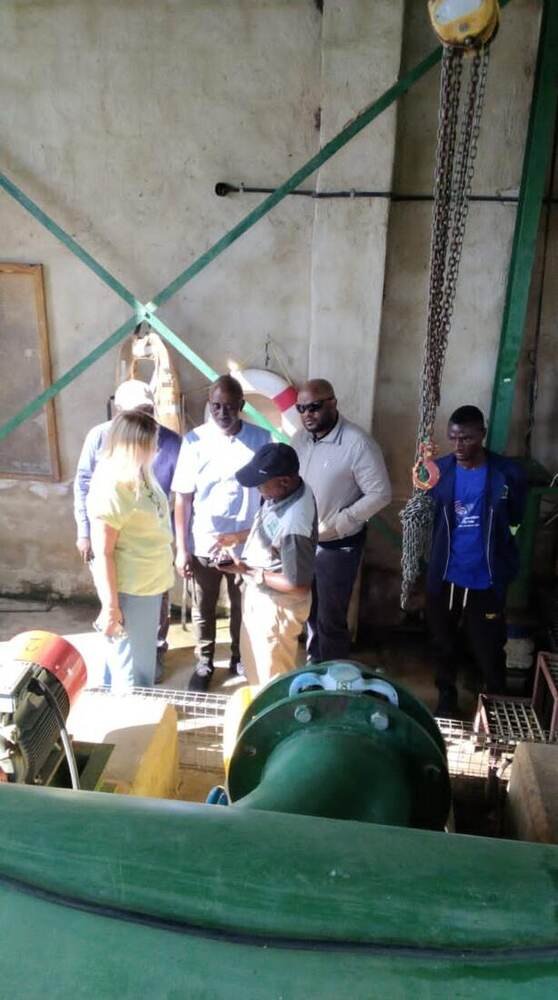
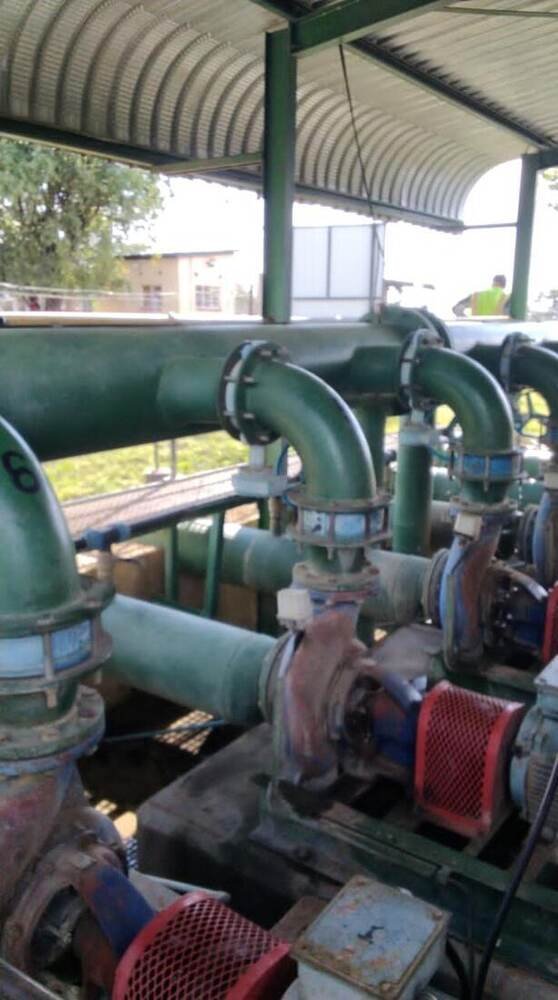
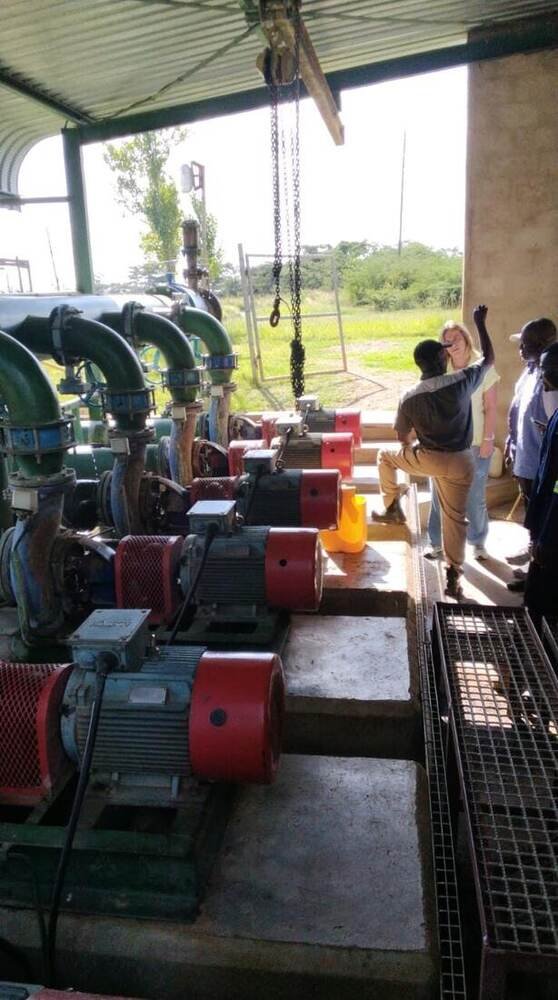
Water is pumped and distributed to the block through siphons and furrows. The soils — deep, well-drained sandy clay loams on a gentle slope — suit surface irrigation without serious erosion risk.
Local employment
At the peak of the 2025 season the farm employed 166 people — fixed-term and seasonal staff drawn from the surrounding community for weeding, herbiciding, crop guarding, irrigation and security.
Figures from the Project Manager's report for the quarter to September 2025. Pumps were overhauled, 200 replacement siphon pipes procured, and a tractor, disc plough and light truck added to the farm's equipment during the same period.
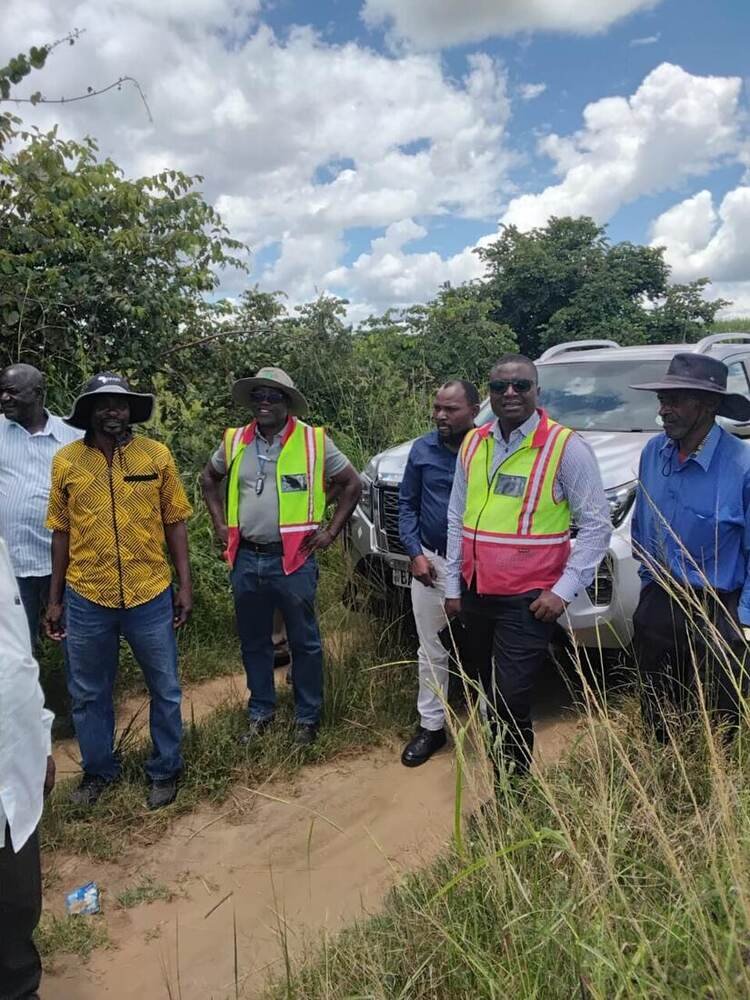
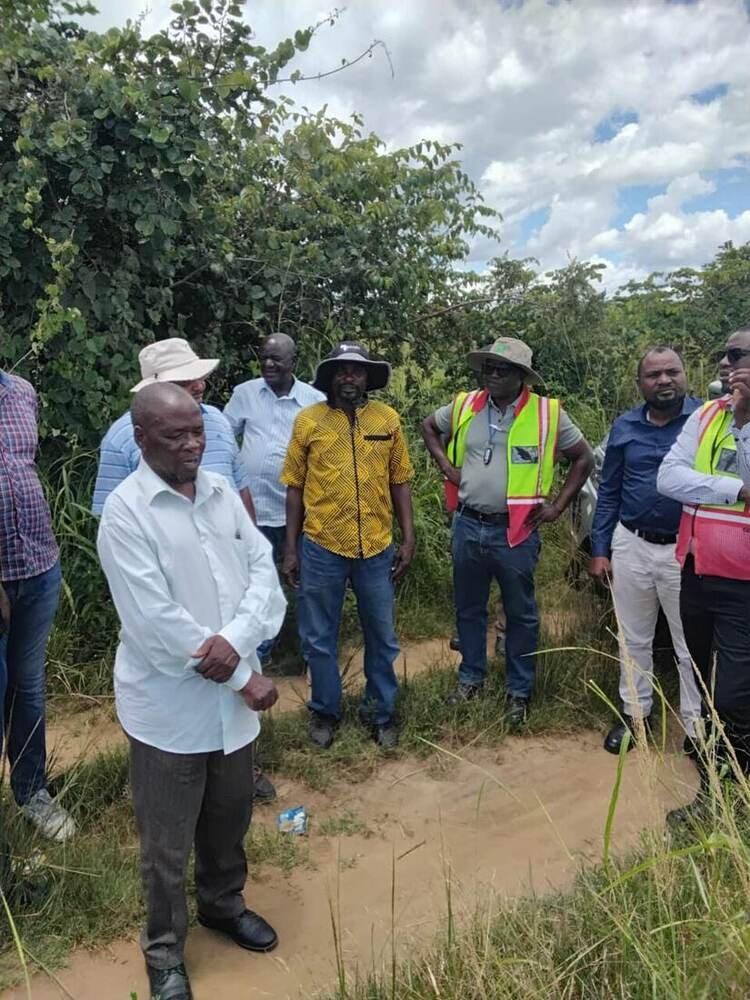
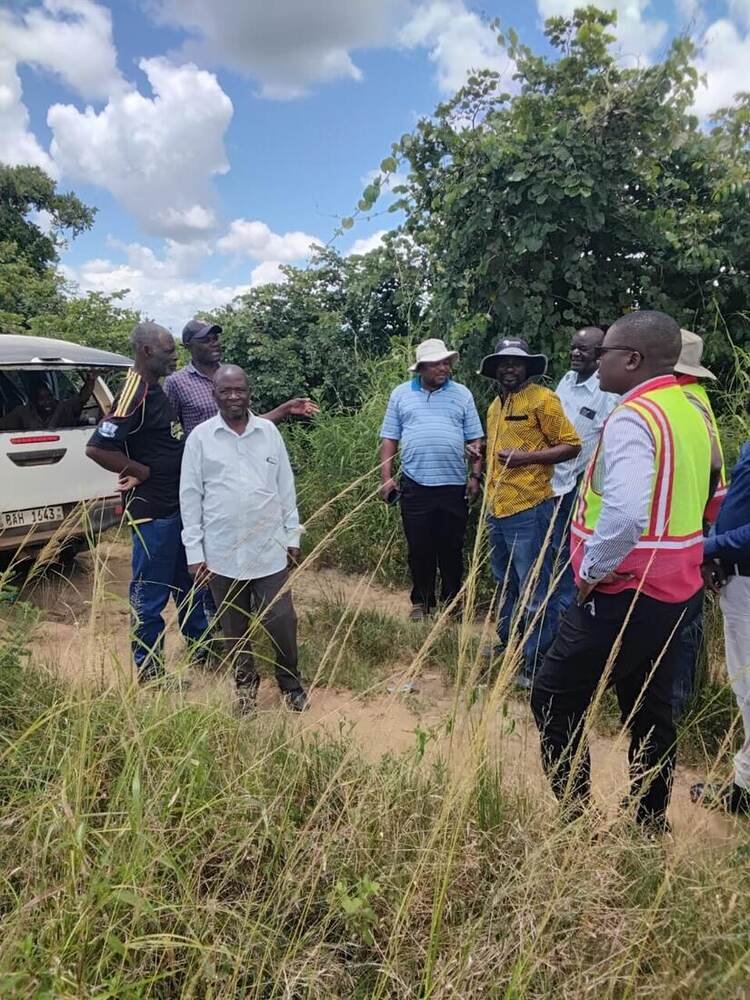
Surveying the ground for the next block
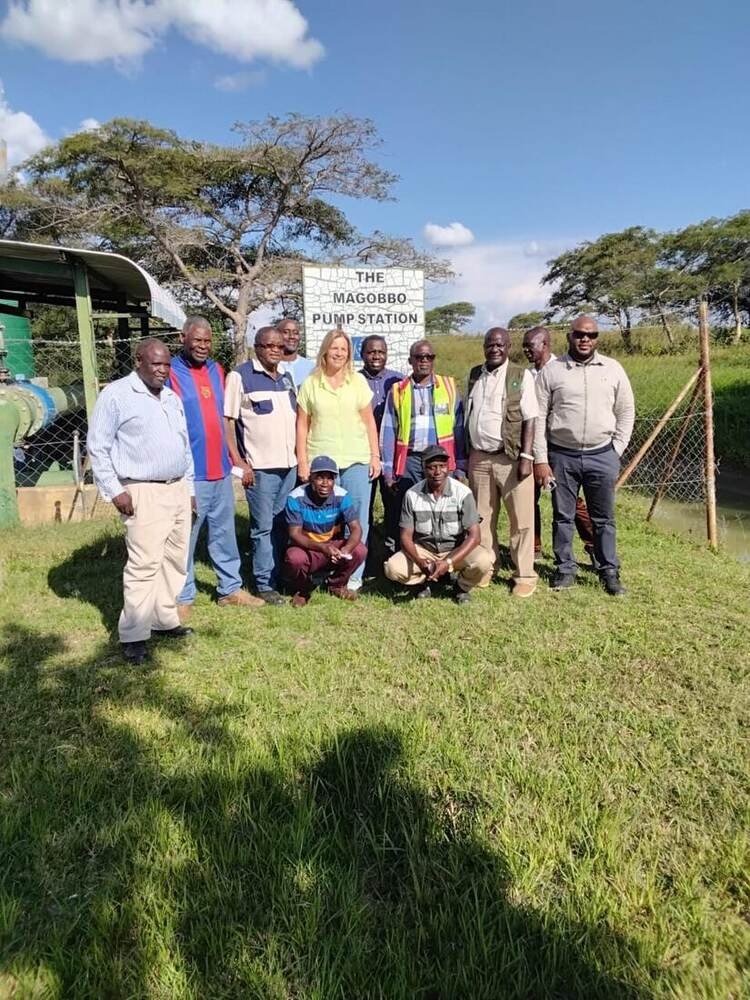
Land adjoining the existing block has been earmarked for expansion, and the parties who would have to make it work walked it together — the mill's cane supply team, the Trust's leadership and management, and the traditional and community authorities who speak for the settlement.
Bringing more of the settlement's arable land under irrigated cane is the clearest route to widening membership of the scheme and lifting the number of households earning from it.
- Zambia Sugar cane supply
- MCGT Executive Chairperson
- Lubombo senior headmen
- Settlement committee
- MCGT management
Grown independently, milled together
Magobbo farms its own block, but the scheme sits inside a wider cane economy — built with grant funding and sustained by long-standing relationships with the mill, neighbouring growers and suppliers.
Zambia Sugar Plc
The Trust's cane is delivered to the Nakambala sugar factory in Mazabuka. Zambia Sugar also manages the bulk water supply that feeds the district's cane schemes, including Magobbo.
European Union
An EU grant underwrote the development of the block farm — land preparation, the furrow irrigation scheme and the establishment of the out-grower model the Trust still operates under.
Mazabuka Sugarcane Growers Trust
MSCGT facilitated the financing and administration of the Magobbo project, and works to promote sugarcane growing and related activities by Zambians across Mazabuka district.
Nanga Farms
Magobbo sources seed cane and procures fertilizer through Nanga Farms, its neighbour on the eastern side of the block.
Cane Growers Association of Mazabuka
Through the association, Magobbo growers are represented alongside all other growers in the district on cane delivery, pricing and payment matters.
Harvesting, haulage and irrigation
Harvesting and haulage are carried out under contract, and irrigation equipment — pumps, siphon pipes and dam works — is supplied and serviced by specialist irrigation firms.
From the block farm
Season updates, Trust meeting notices, and news from members and partners.
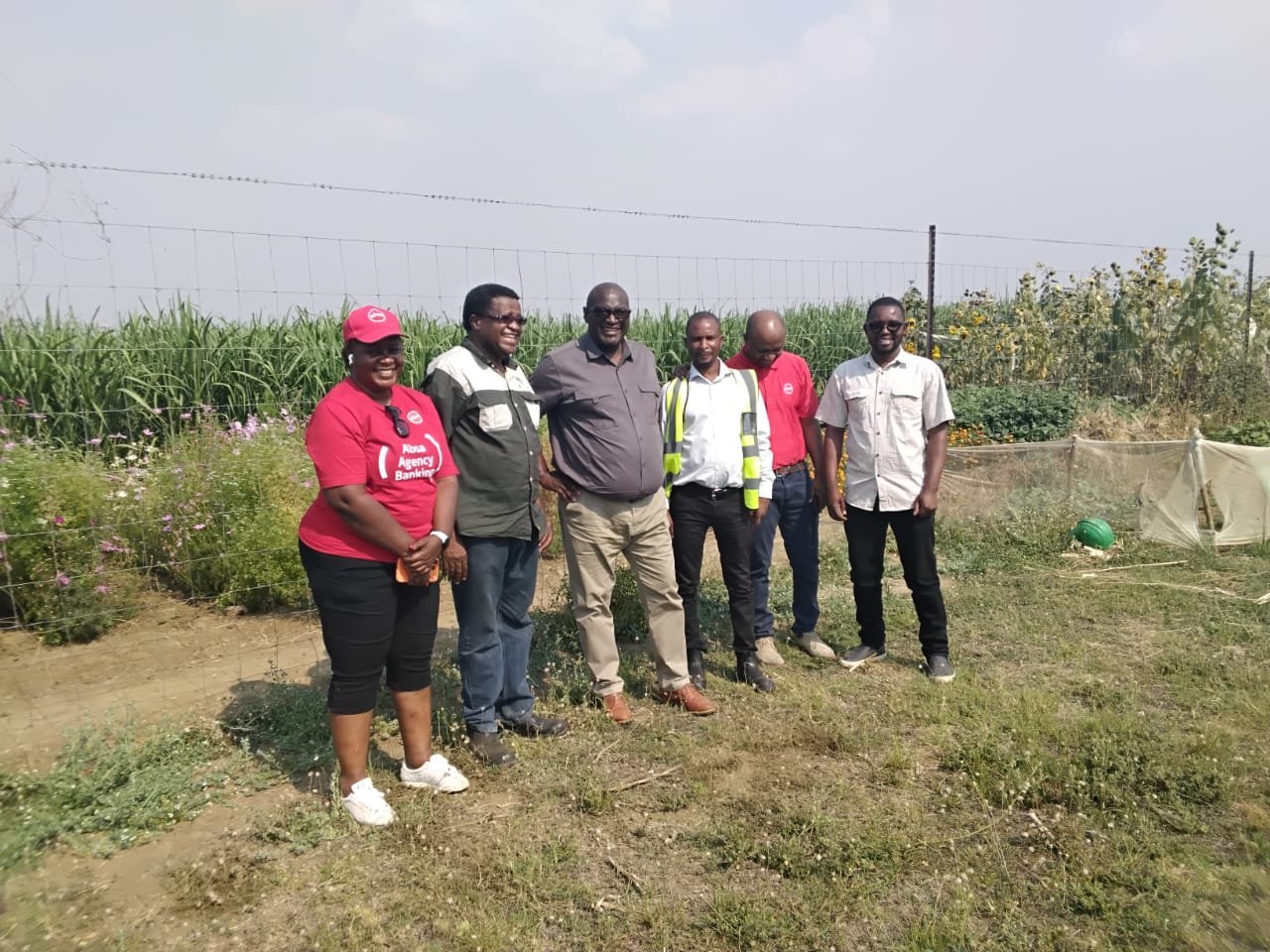
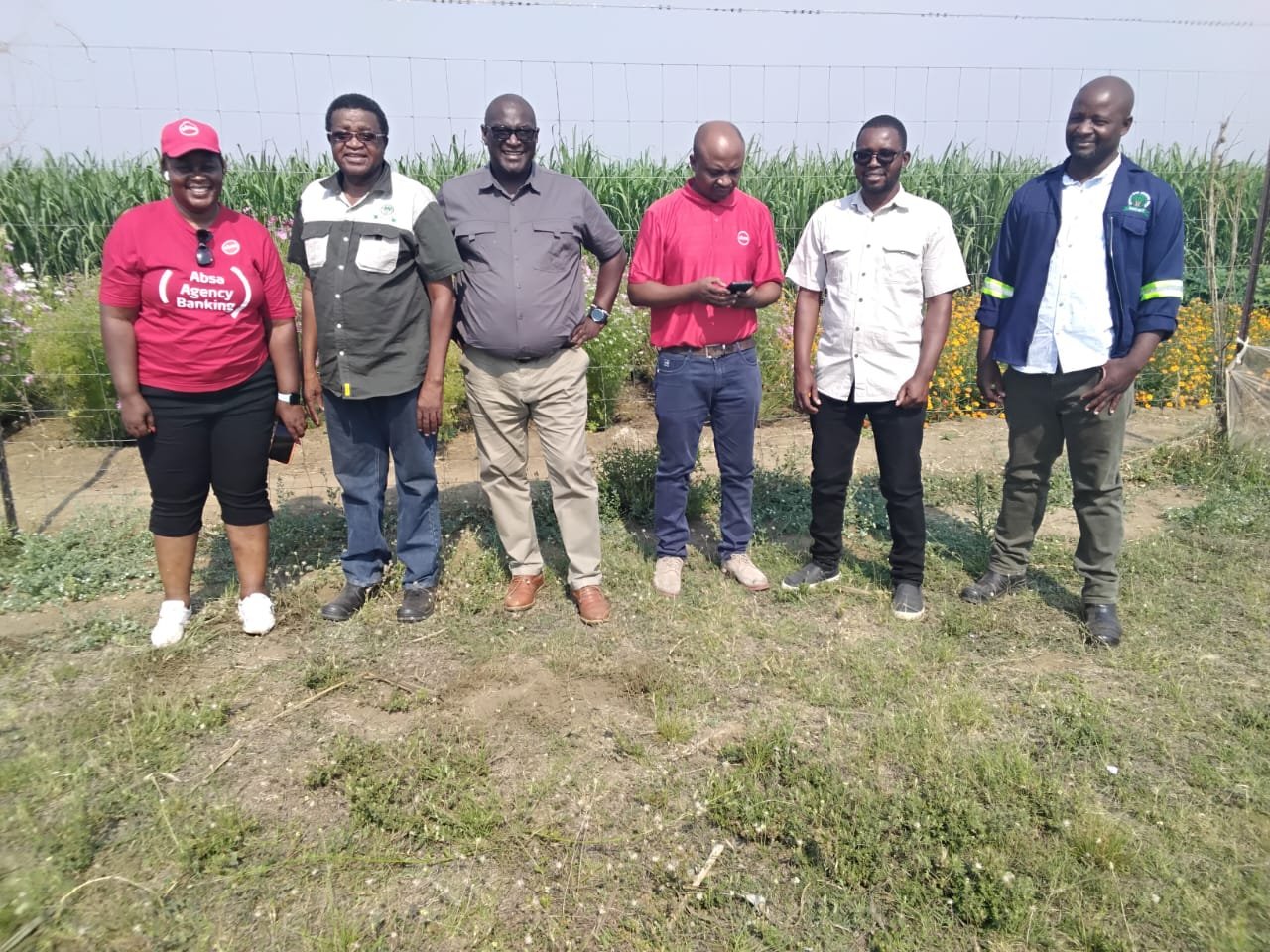
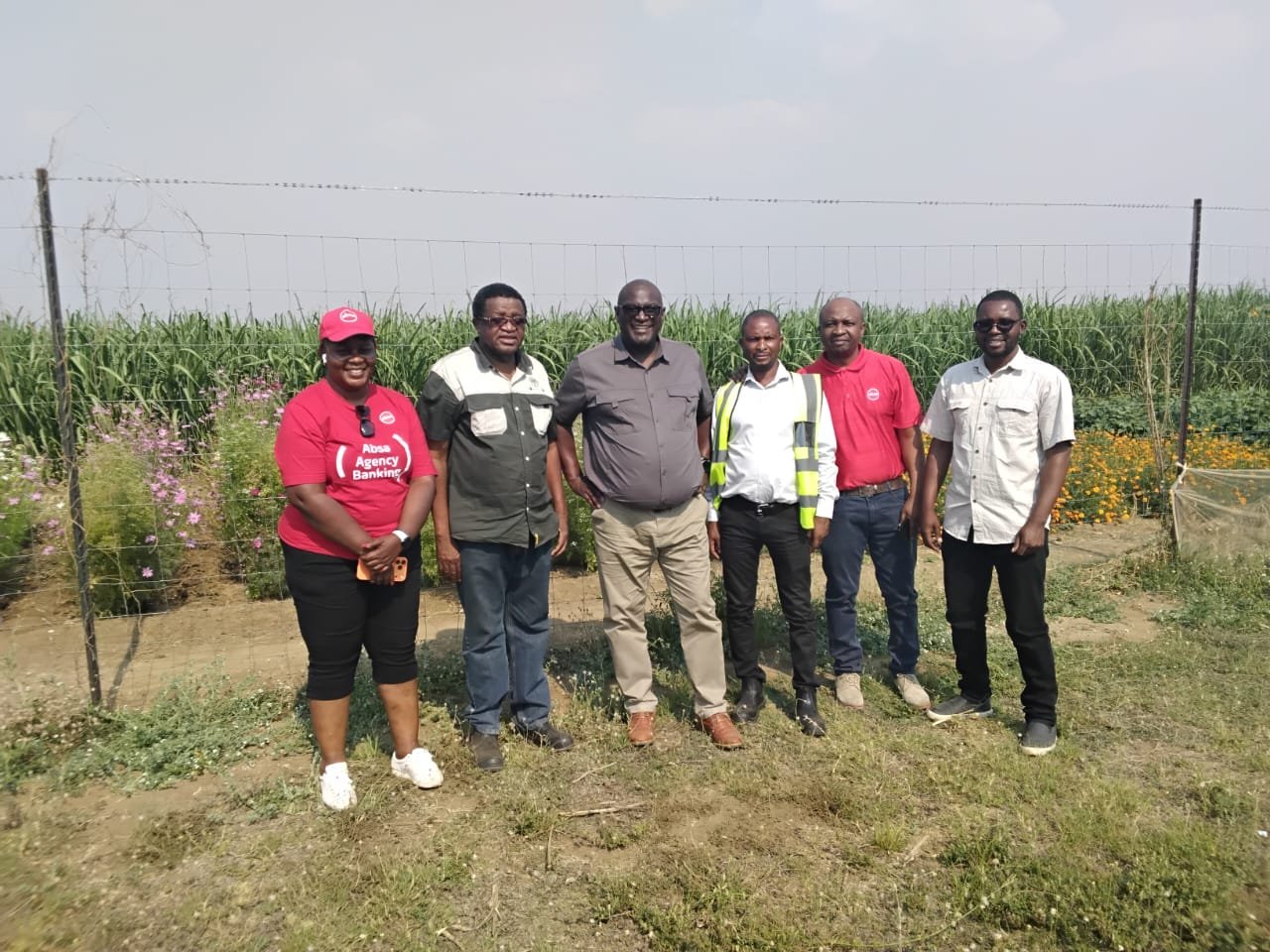
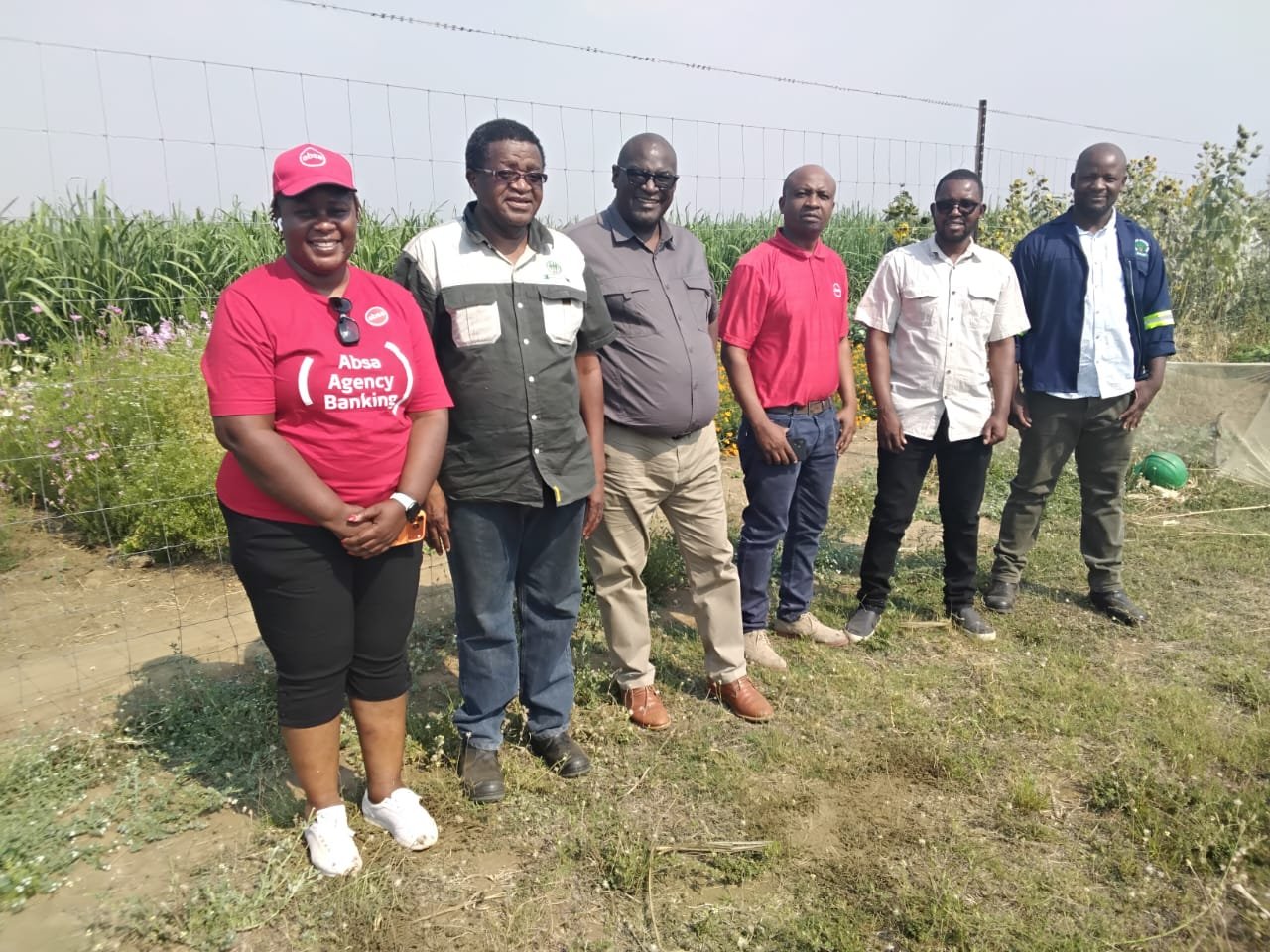
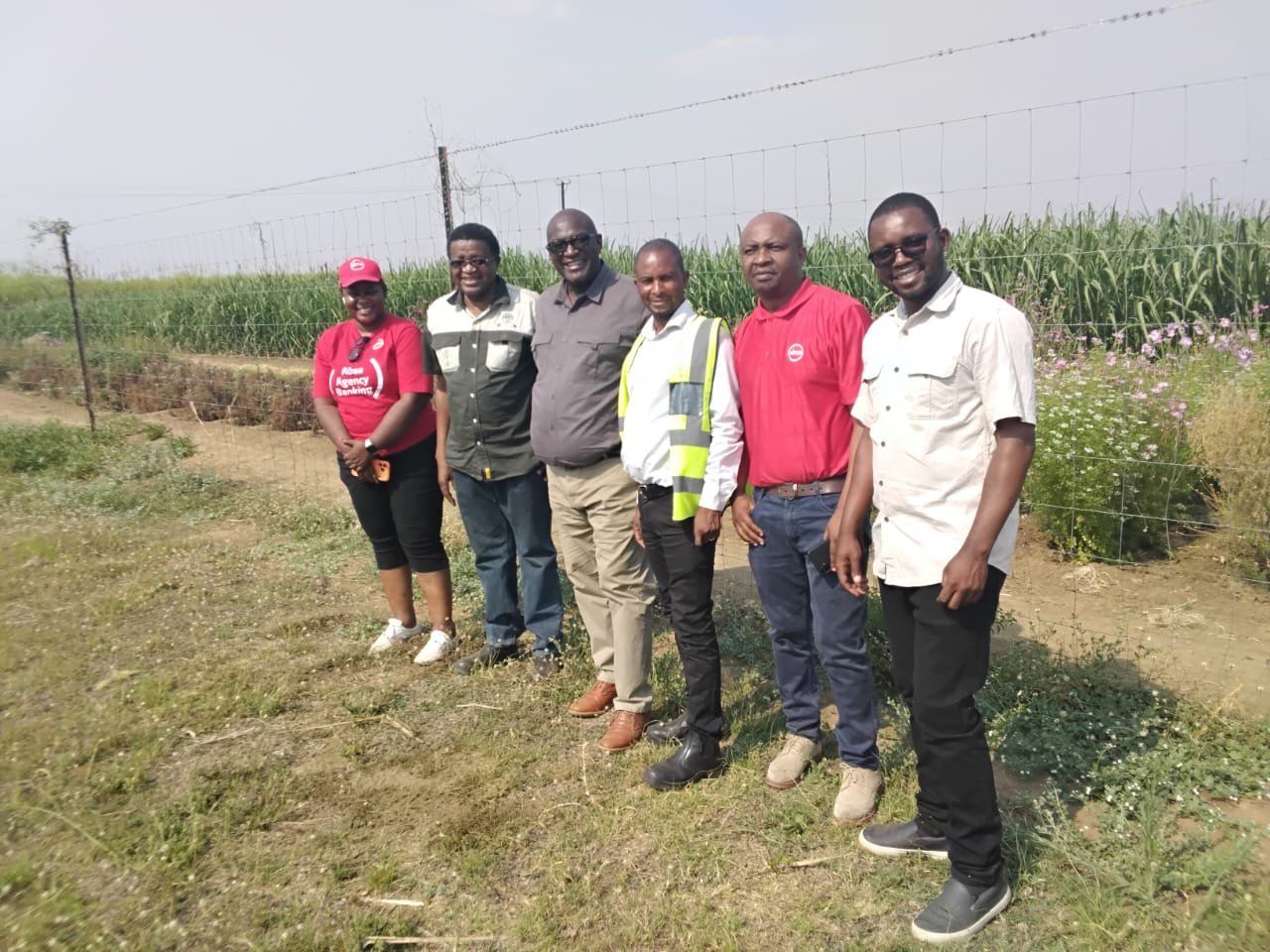
Visit by ABSA Agricultural Business Team – Magobbo
The ABSA Agricultural Business Team from Lusaka visited Magobbo to appreciate our business relationship and explore cooperation under the Grow Zambia Agenda. After a brief presentation on our areas of need, they expressed interest in doing business with the Trust in the near future.
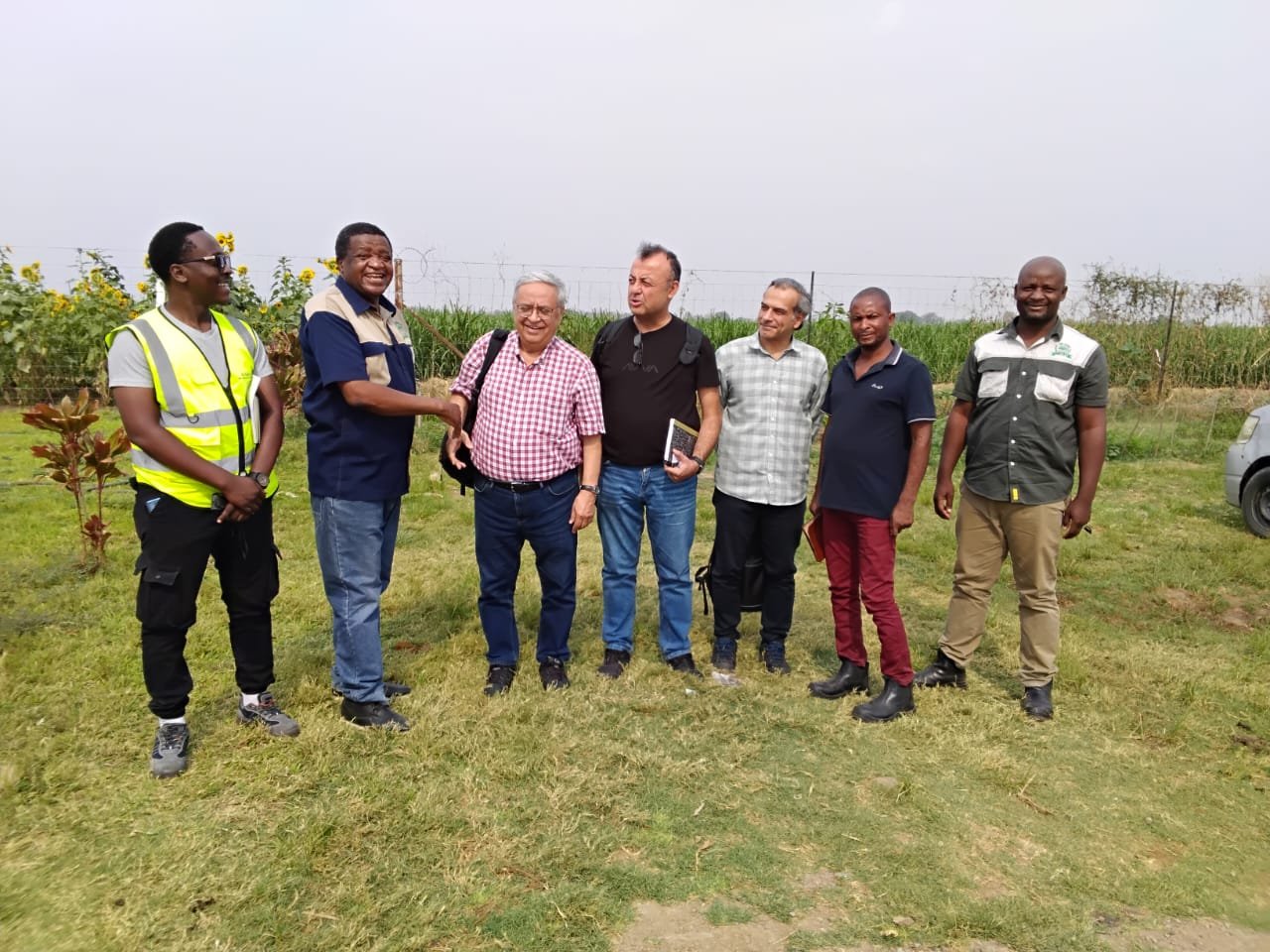
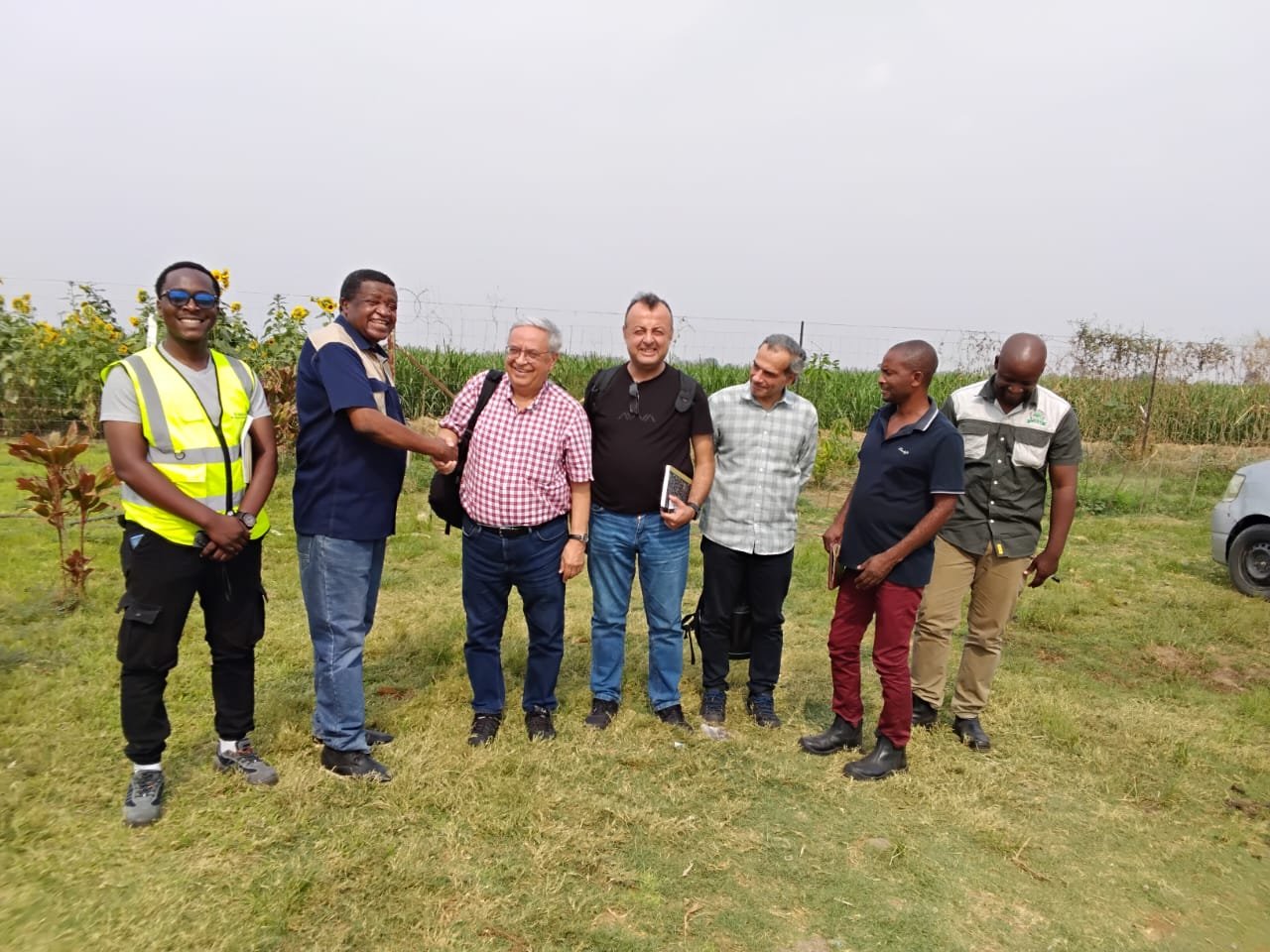
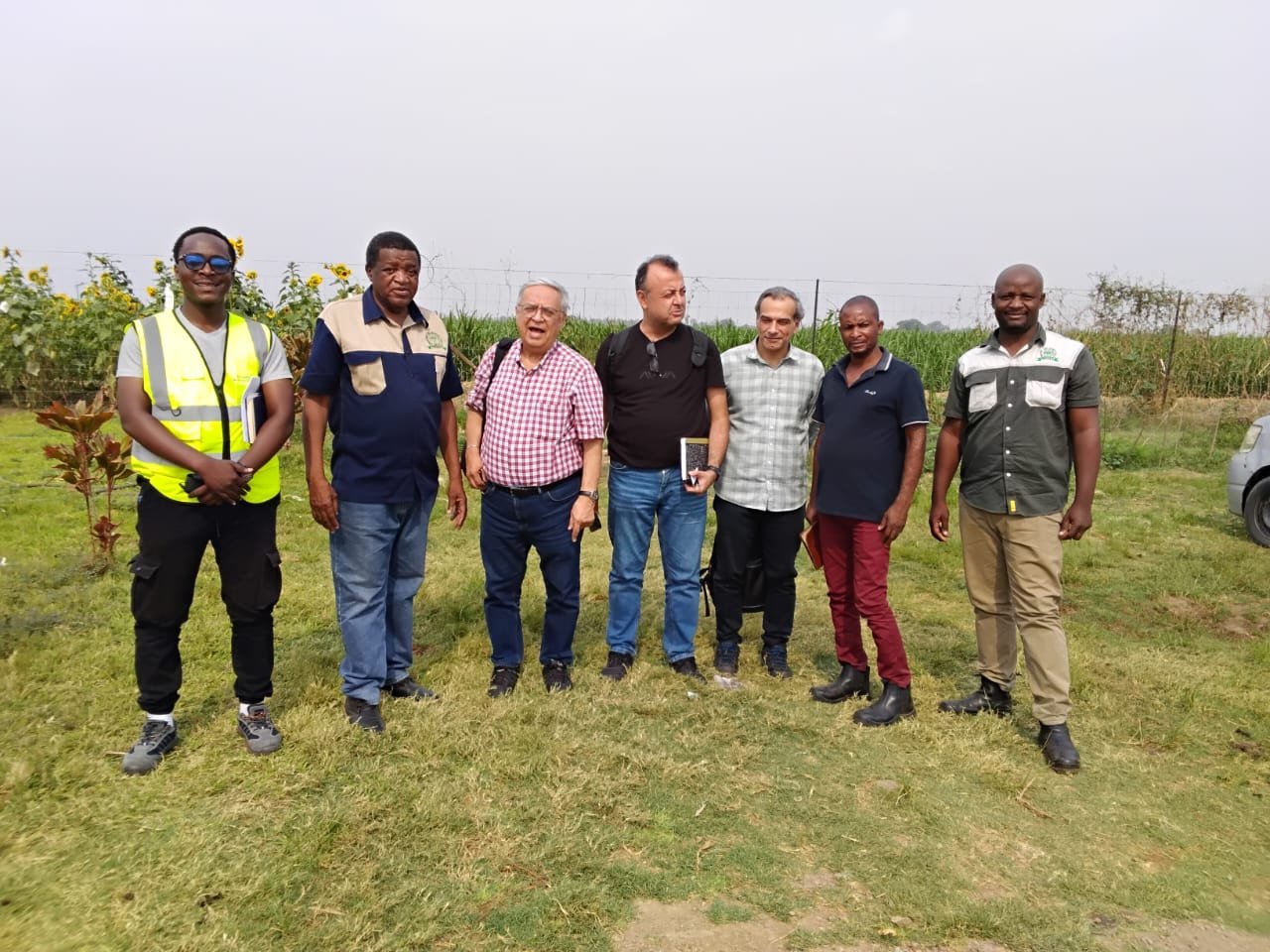
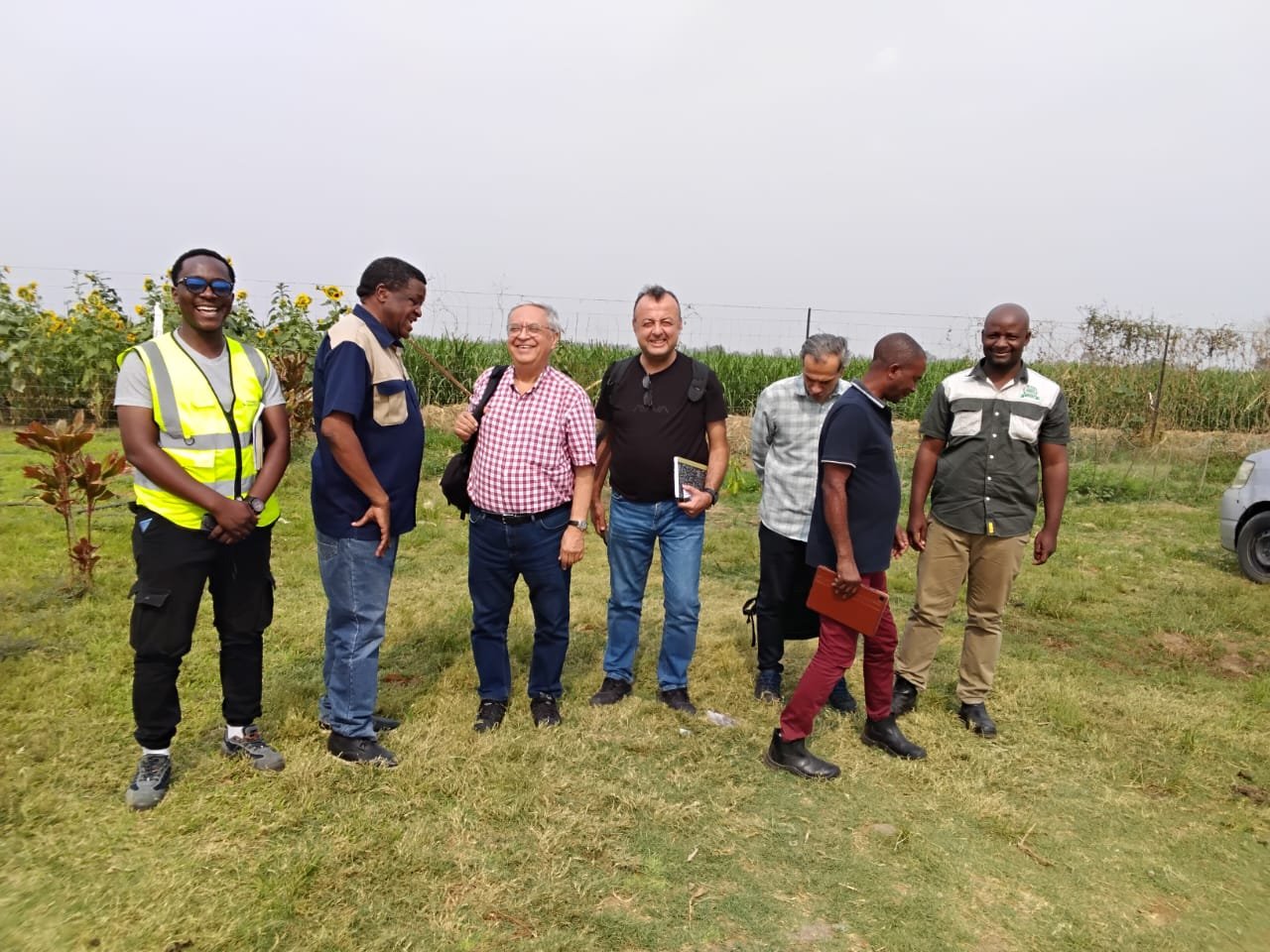
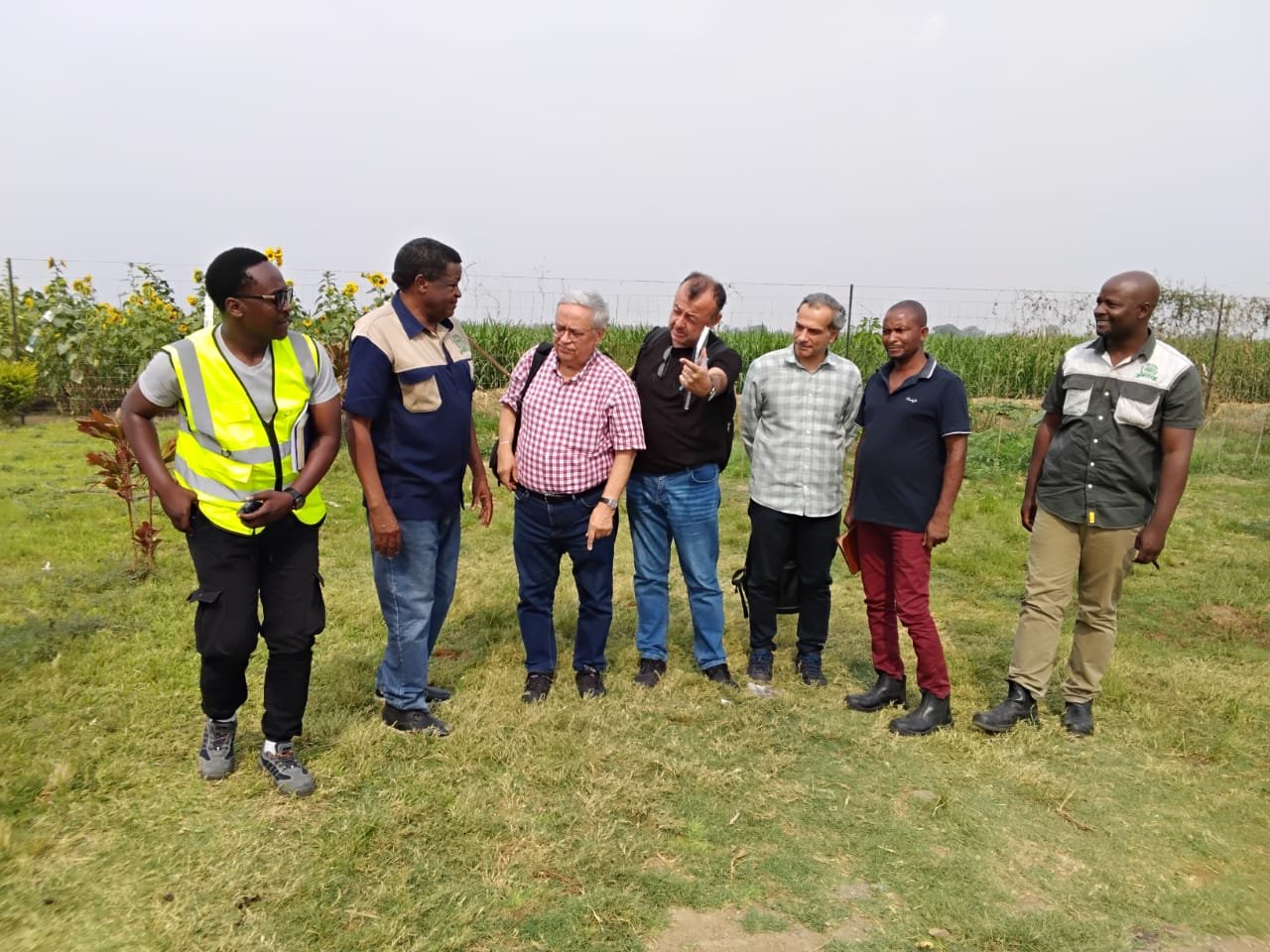
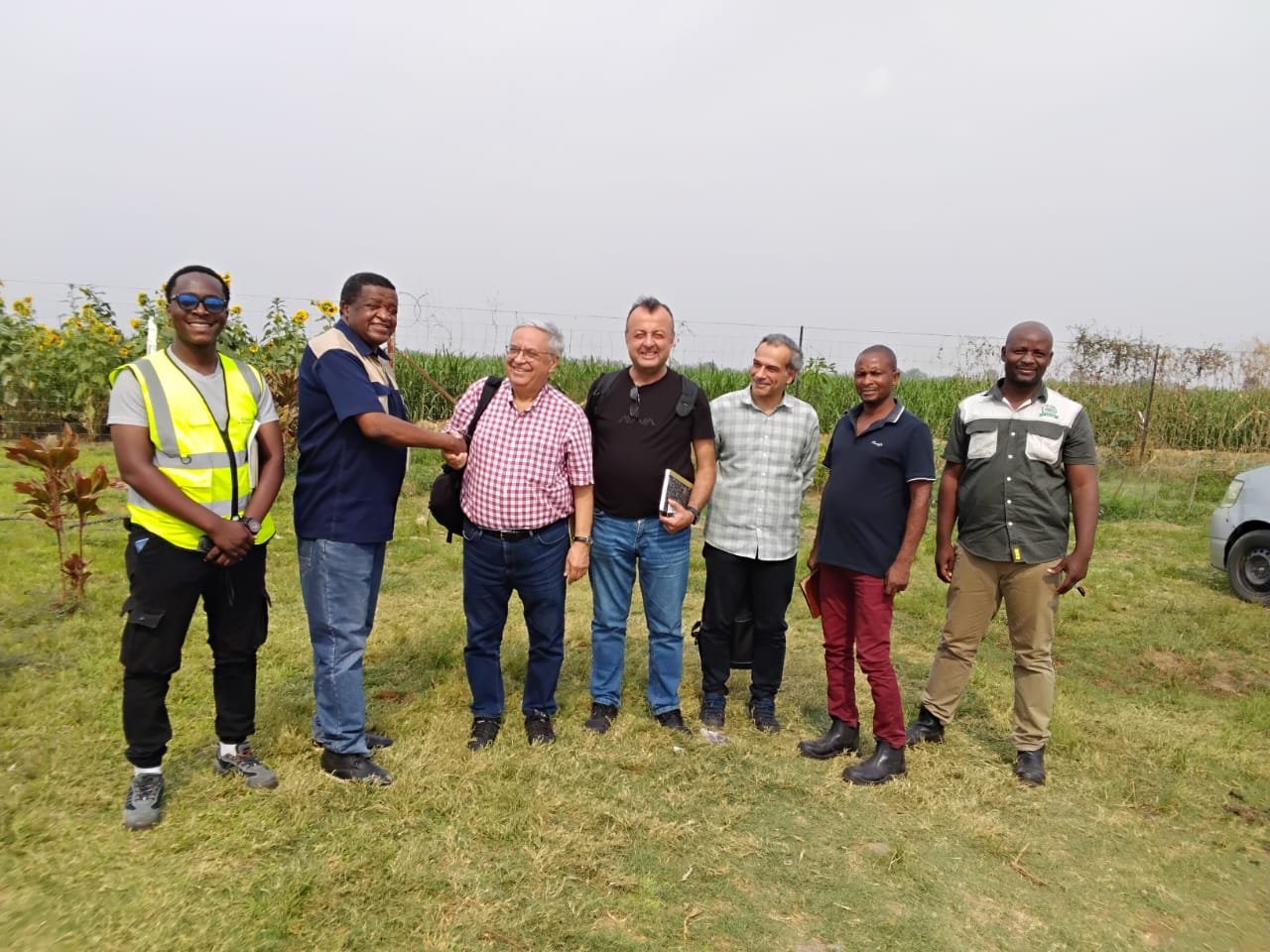
Visit by Delegation from Turkey – Magobbo
A delegation from Turkey, surveying Zambia Sugar and KASCOL, also visited Magobbo on the advice of the Ministry of Agriculture. We took them through the background of Magobbo from inception to date and our future plans, and they were very impressed with the progress.
Harvest passes 339 hectares
Harvesting and haulage opened on 9 April 2025 and has since covered 339.55 hectares, yielding an average of 115 tonnes of cane per hectare — ahead of target, with one field reaching 193 t/ha.
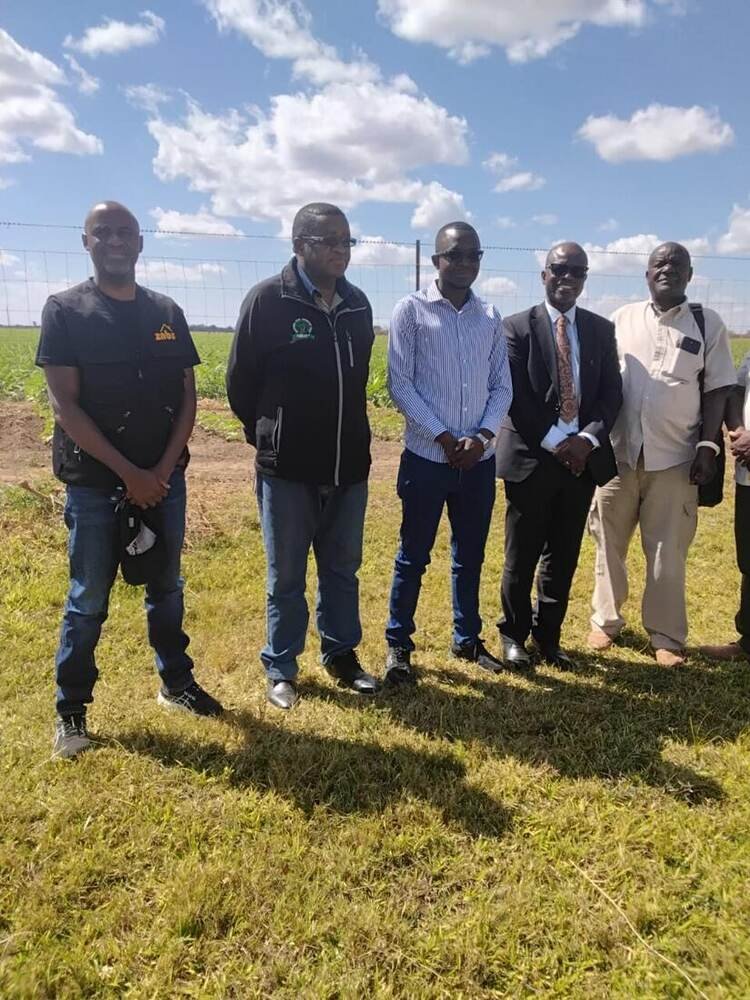
The block farm, in pictures
Visit by ABSA Agricultural Business Team – Magobbo
On 21 October 2026 we were visited by the ABSA Agricultural Business Team from Lusaka.
The team came to appreciate our business relationship and to explore areas of cooperation under the Grow Zambia Agenda, as the sugar industry looks forward to achieving one million tons of sugar.
We made a brief presentation highlighting our areas of need, and the team was very happy with the engagement. They expressed interest in doing business with Magobbo Cane Growers Trust in the near future.
Visit by Delegation from Turkey – Magobbo
On the afternoon of 29 September 2026 we were visited by a delegation from Turkey. Their mission is to conduct a survey at Zambia Sugar and KASCOL, but the Ministry of Agriculture advised them to also visit Magobbo as there is a lot to learn from our model.
As usual, we held a debrief meeting in the Boardroom where we narrated the background of Magobbo from inception to date and our future plans. They were very impressed with the progress.
They will send a questionnaire by email for us to complete and return.

Reach the Trust
- Registered office
- Farm No. 125a, Magobbo
Mazabuka District, Southern Province, Zambia - Postal address
- P.O. Box 212, Mazabuka, Zambia
- Telephone
- +260 975 732 580
+260 977 689 715 - admin@magobbocanegrowerstrust.com
- Finding us
- About 17 km north-east of Mazabuka in Chief Naluama's area, between the Nakambala Estate and Nanga Farms, on an all-weather gravel road.